


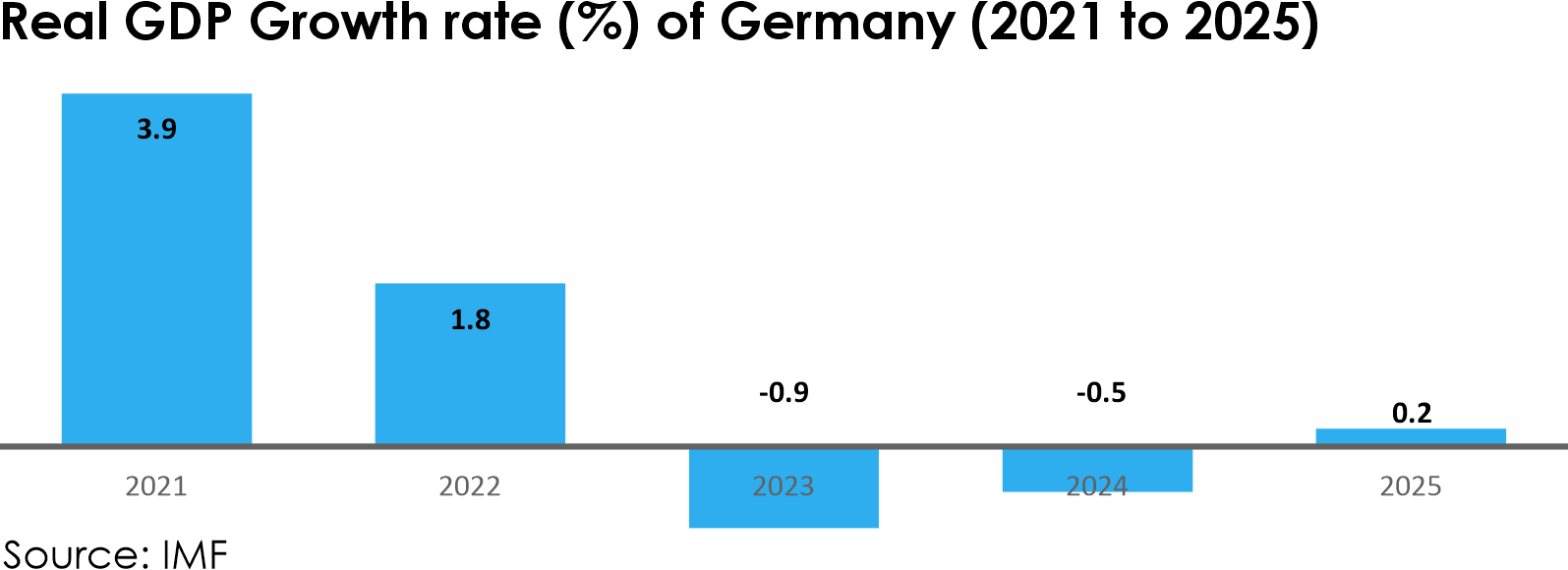
Germany is the largest economy of Europe and fifth largest in the world in terms of Purchasing Power parity (PPP). Its highly skilled labour force, continuous advancement in technology and well thought out development planning has made it one of the leading developed economies of the world. Like the rest of the world, Germany also suffered economic losses during the pandemic, revival from which was mired by geo-political tensions across the globe. The country went through two years of contraction and in 2025 too, it is expected to stagnate. However, rebound is expected in 2026 and 2027 driven by increase in public spending, lower inflationary pressure indicating increasing real income and increasing private consumption. As per the World Bank, recovery is expected in corporates' equipment investment in 2026 which may also imply significant demand in engineering sector.
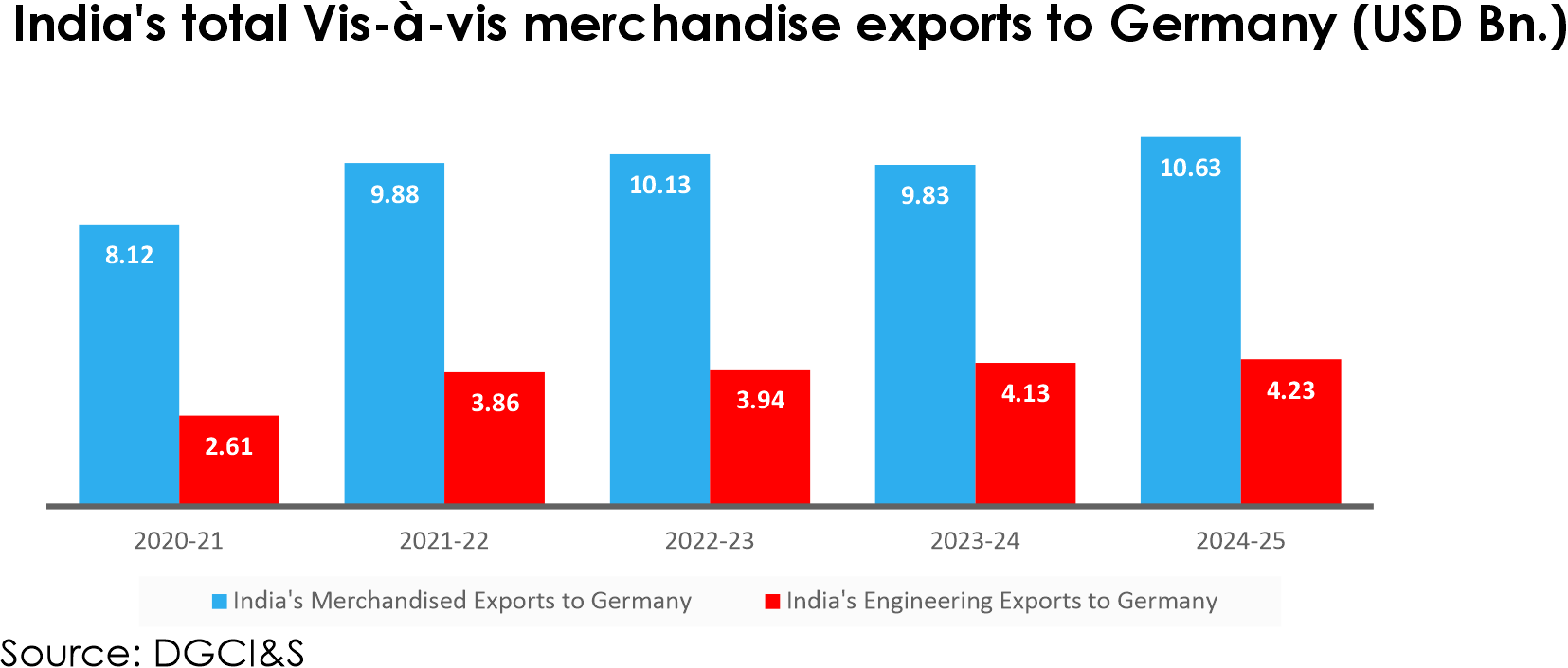
Germany is the fifth largest destination for India's engineering exports and the largest in European Union. Engineering exports to Germany was recorded at USD 3.24 billion in 2018-19 and then, after declining in the next two fiscals due to the pandemic, it continued its rise in the next fiscals. In FY 2024-25, engineering exports to Germany increased by 2.4% while India's overall merchandised exports to Germany increased by 8%. Major engineering panels exported from Germany to India include electrical machinery, products of iron and steel, auto components and parts, industrial machinery, medical and scientific instruments, auto tyres and tubes, IC engines, injecting and moulding machinery etc. in 2024-25, India's total exports of automobile and auto components to Germany stood at USD 1.37 billion.
Germany is the major hub of engineering sector in the Europe mainly due to its technological prowess, high skill level and geographical location. Germany's automotive sector is recognised globally and is projected to record good growth in the coming years. Within Germany demand is mostly created in areas of cost-efficient and high quality components. The Electric Vehicle industry also offers many opportunities for India's participation in German value chains. Such relations may also fuel joint ventures fostering engineering R&D in India. The major advantages offered by India include cost-efficiency and familiarity with German standard requirements. The recently concluded India-EU FTA which is will be implemented in 2027 is also projected to grant substantial market access to Indian products. In this scenario, India's participation in this exhibition is expected to create significant gains for the industry.